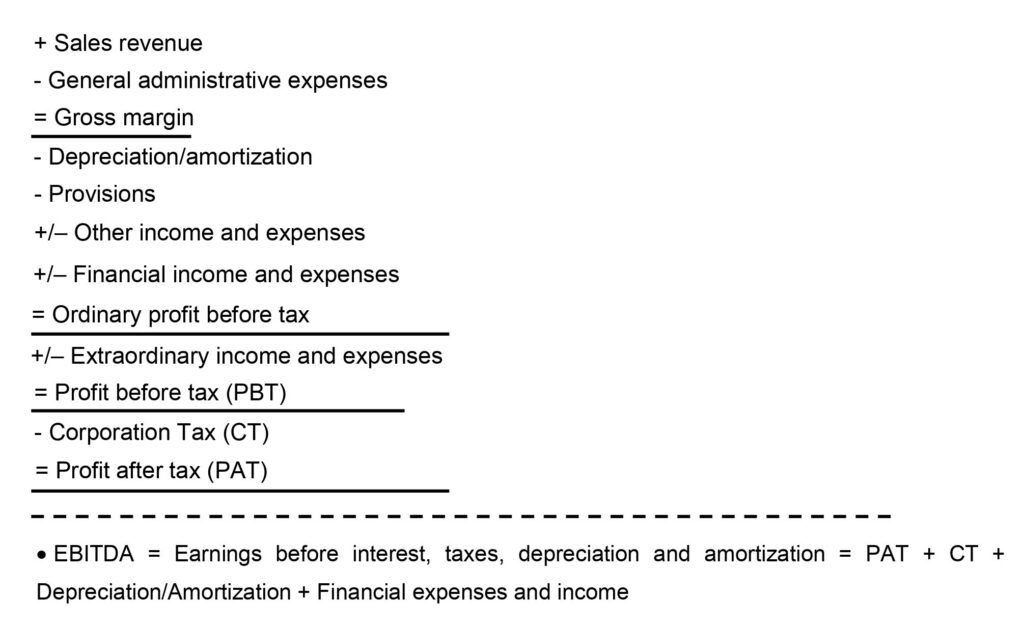
EBITDA (“Earnings before interest, tax, depreciation and amortization”) is an indicator that measures the gross operating margin of the company before deducting interest, taxes and depreciation/amortization.
The main difference between EBIT (operating result) and EBITDA is that the former takes into account depreciation/amortization for its calculation, while the latter does not.
The interest paid by a company is considered to depend on its level of indebtedness and current interest rates. On the other hand, depreciation/amortization depends on the book value of the investments made and the depreciation/amortization criteria applied. Finally, taxes depend on interest and depreciation/amortization and, of course, on current regulations, which vary based on criteria beyond the control of the business. Therefore, by eliminating these “distortions”, EBITDA allows a more homogeneous comparison between companies in terms of operating activity.
Below it is an outline of a company’s income statement and how to calculate EBITDA from it: