
The draft is a collection instrument by which a financial institution, following precise instructions from its exporting client, will make available to the importer the documents that will provide them the ownership of the merchandise. In order for the exporter’s institution to carry out this service, it needs the collaboration of the importer’s institution, to which it will send the documents and delivery instructions. Although none of the institutions to which the documents are entrusted undertakes a payment commitment, they do provide the exporter with the assurance that said documents will not be delivered to the importer until they are paid, on demand or within a term, or until an instrument drawn at their expense is accepted.
The documents that accompany the drafts can be:
- Financial: Bills of exchange, instruments, promissory notes, receipts.
- Commercial: Sales documents (commercial invoice), transport (maritime bill of lading, air waybill, truck waybill, etc.), insurance (insurance policies or certificates) and other documents such as certificates of origin, phytosanitary certificates, list of weights, packing list, etc.
Types of drafts
Depending on the criteria used, drafts can be:
- Clean: Consisting of a letter of instructions from the exporter’s bank accompanied by one or more financial documents.
- Documentary: Composed of a letter of instructions from the exporter’s bank accompanied by documents of a commercial and / or financial nature.
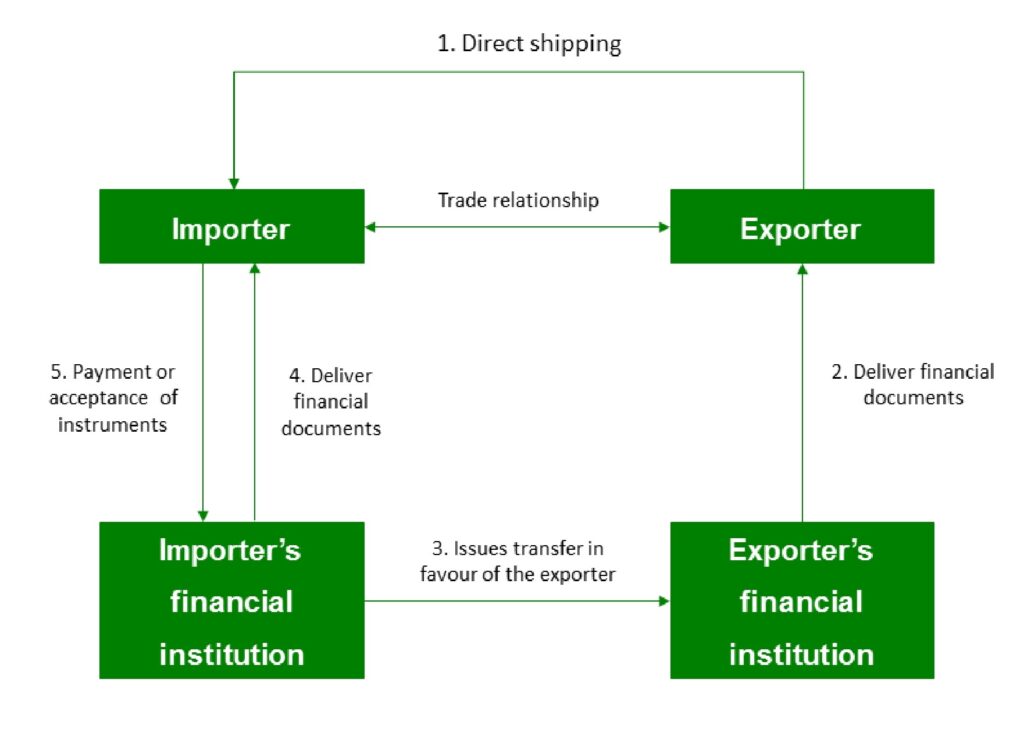
The circuit followed by a draft is as follows:
1. The exporter dispatches the merchandise.
2. Once the merchandise has been shipped, the exporter goes to their bank to deliver the commercial and / or financial documents of such shipment (which will have been previously agreed with the importer).
3. The exporter’s bank forwards the documents delivered by its client to the importer’s bank.
4. Once the documents have been received by the importer’s bank, the latter contacts the importer to verify them and to make the payment of the merchandise (or the acceptance of the instruments, if applicable).
Once the supporting documents are available, the importer may collect the merchandise at the place agreed with the exporter, presenting the corresponding documents.
In the event that the importer refuses to make the payment, they will be unable to collect the merchandise, which will be returned to the exporter, with the storage and transportation costs being the responsibility of the exporter.
In turn, drafts can be:
- Payable at sight: Those in which it is indicated that the documents must be delivered against payment.
- With deferred payment: They allow the delivery of documents with a future payment date.